Paint Finish
Blog

Paint Finish Types Explained: Which One Do You Need?

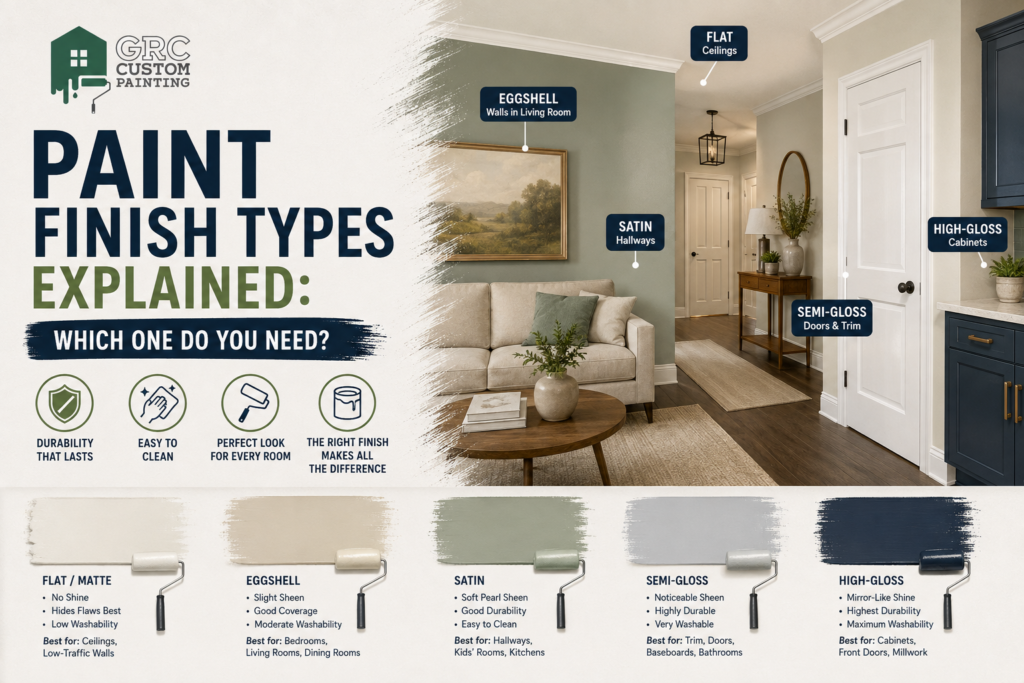
Most people walk into a paint store with the colour already decided. Then someone asks what sheen they want, and the whole thing stalls. It is a fair place to get stuck. Paint finish types affect how durable the wall is, how easily it cleans, how much of your drywall’s history shows, and whether you can ever touch up a scuff without repainting the room. Paint manufacturers do not make it simpler. One brand lists nine finishes. Most homes need three or four. I am Gerry, and I have been painting interiors and exteriors around Woodland, Davis and Sacramento for twenty-five years. At GRC Custom Painting I am the one who prices the job and the one who rolls it, so I have no reason to sell you a finish you do not need. Here is how I actually pick. What Is Paint Sheen, and Why Does It Matter? Sheen is how much light the dried paint reflects. It is not a coating over the colour, it comes from the ratio of binder to pigment in the can. More binder means more shine, a harder film, and better washability. It also means the surface underneath has nowhere to hide. That is the trade-off governing every decision in this article: shine buys you durability and costs you forgiveness. Everything below follows from that one sentence. Sheen changes how colour reads, too. The same soft grey looks lighter and cooler in satin than in flat, because more light is bouncing back at you. Sample on the actual wall before committing. What Are the Main Paint Finish Types? Five finishes cover nearly every residential job. Names differ by brand, and some of those extra options are marketing rather than new categories velvet, pearl and low-lustre all sit between the standard five rather than adding to them. Match on gloss level, not on the name printed on the label. Finish Shine Hides flaws Washability Best for Flat / Matte None Best Lowest Ceilings, low-traffic walls, textured drywall Eggshell Slight Good Moderate Bedrooms, living rooms, dining rooms Satin Soft pearl Fair Good Hallways, kids’ rooms, kitchens Semi-Gloss Noticeable Poor High Trim, doors, baseboards, bathrooms High-Gloss Mirror-like Worst Highest Cabinets, front doors, feature millwork Flat and Matte: What Is the Difference? Not much. The distinction is largely branding, though matte usually carries slightly more binder and takes a gentle wipe better than true flat. Both are non-reflective, and both hide wall imperfections better than anything else you can buy. The drawback is real. Flat scuffs easily and cannot be spot-cleaned, rubbing at a mark tends to burnish it and make things worse. When Should You Use Eggshell or Satin? These two cover most of the walls in a typical house. Eggshell has a slight sheen and suits calm, low-traffic rooms, bedrooms, formal living rooms, dining rooms. It cleans better than flat while still forgiving minor drywall flaws. Satin has a soft pearl-like sheen and belongs where hands, pets and cleaning happen. Hallways, kids’ rooms and kitchen walls are its natural home. The catch with satin is that it shows roller marks and surface flaws that eggshell hides. If the drywall is not in good shape, satin will tell everyone. Is Semi-Gloss or High-Gloss Better for Trim? Semi-gloss is the standard for trim, doors, baseboards and casing. It is durable, washable, and its shine separates the millwork from the wall visually. High-gloss goes on cabinets and front doors where you want a near-lacquer result. It is unforgiving of both the substrate and the person applying it, every brush mark and bit of raised grain shows. Rarely a sensible DIY finish. Which Paint Finish Is Best for Each Room? Room function decides sheen more than taste does. I look at moisture, then traffic, then the condition of the walls, in that order. Kitchens take satin on the walls. It handles grease and wiping without turning the room into a mirror. Bathrooms are where I disagree with the standard advice. Semi-gloss walls are a holdover from before satin formulations improved. In a bathroom with a working extractor fan, satin has plenty of moisture resistance and looks far better. Bedrooms and formal living rooms suit eggshell. They are low-traffic, and the softer finish makes the room feel calmer. Hallways and stairwells need satin. These are the highest-contact surfaces in any home and they get scrubbed the most. Ceilings take flat, always. A ceiling is a wide, poorly-lit plane where every seam and texture inconsistency waits to show, and any sheen will find them. Trim, doors and cabinets take semi-gloss or high-gloss, for the durability and the visual separation from the walls. If you are pulling a whole interior painting project together, this contrast is what makes it read as finished rather than flat. Which Paint Finish Hides Wall Imperfections Best? Flat wins outright, with eggshell a clear second. The reason is physics. Light travelling across a wall at an angle rakes over every seam, patch and nail pop, and a reflective surface throws that back at you. Absorb the light instead and the flaws largely disappear. This matters a great deal around here. A lot of the housing stock in Woodland and Davis is 1950s through 1970s ranch, and those walls have had decades of settling, patching and texture repair. Putting satin on them is asking for trouble. Why Does Touch-Up Paint Look Shiny? This is the question I get most often after a job, and almost nobody covers it before you choose a finish, which is when it matters. A touch-up can match the colour perfectly and still look wrong. Colour and sheen are two different things, and only one comes out of the can. Sheen depends on how the surface absorbed the paint, how it was applied, and whether the wall is carrying a full two coats. Dab fresh paint onto a spot and it often dries with a slightly different reflectance than everything around it. That is flashing, and it shows up worst at an angle
Limewash vs Whitewash
Blog

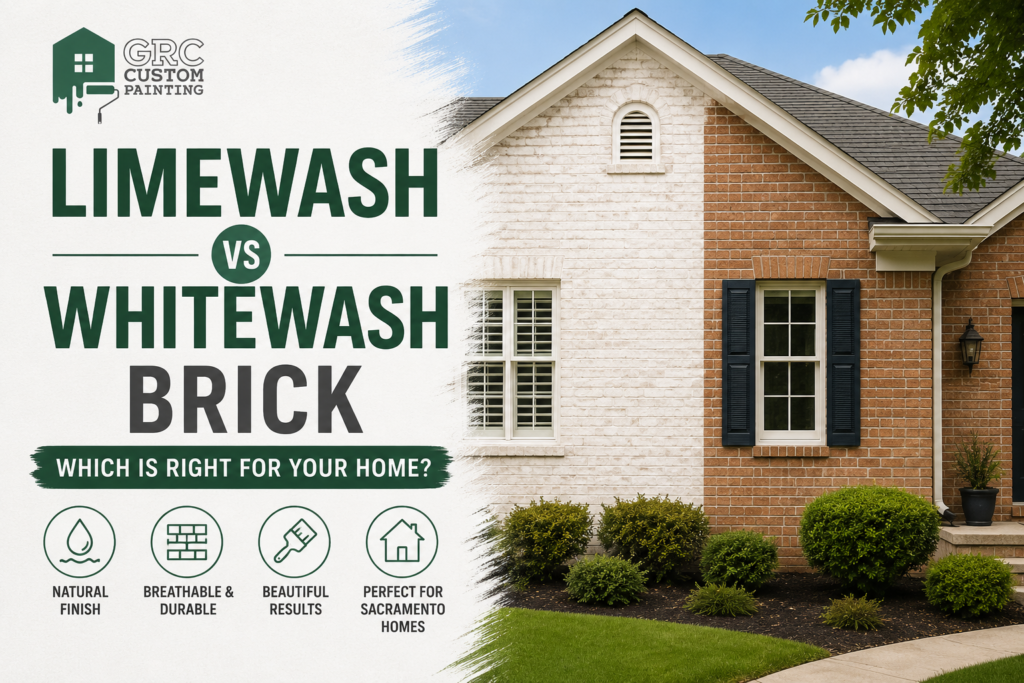
Limewash vs Whitewash Brick: Which Is Right for Your Home?

Dated brick is one of the most common things homeowners ask me about. The house is solid, the masonry is fine, but that peachy red or dark rust colour makes the exterior feel decades older than it is. Two options come up straight away, and they sound like the same thing. They are not. Limewash and whitewash produce different finishes, last different lengths of time, and commit you to very different levels of permanence. I am Gerry, and I have prepped and coated masonry for twenty-five years across Woodland, Davis and the greater Sacramento area.  At GRC Custom Painting I handle every project personally, which means I am the one looking at your brick and the one coating it. If you already know you want it refreshed, you can see my exterior painting services, but read this first, because choosing the wrong finish is expensive to undo. What Is Limewash, and How Does It Work on Brick? Limewash is one of the oldest masonry coatings there is, slaked lime, meaning limestone fired and then hydrated, mixed with water and sometimes a mineral pigment. What makes it different from paint is where it ends up. Limewash soaks into the porous surface of the brick rather than forming a film across it. Once on the wall, the calcium hydroxide reacts with carbon dioxide in the air and hardens back into a mineral layer, effectively becoming part of the brick face. That is why limewash stays breathable, the masonry can still release moisture, which matters on older brick. It also ages in a way paint never does. Limewashed brick develops a chalky, matte patina and erodes gently, so it softens rather than fails. Some people love that weathered European look; others find the lack of uniformity frustrating, and it is worth being honest about which camp you fall into. Colour range is the real limitation white and a narrow band of earth tones. It is low in VOCs, though, which matters with children or pets in the house. What Is Whitewash, and How Is It Different? Whitewash is diluted paint, roughly a half-and-half mix of water and latex or acrylic, brushed on thin so the brick’s texture and variation still read through. The critical difference is that whitewash sits on top of the brick, forming a thin, semi-transparent film rather than penetrating it. That film is where its advantages come from. The finish is smoother and far more uniform, the colour range is effectively unlimited, and it will go over brick that has already been painted. It also wears differently. Being a film, whitewash can chip or peel at the end of its life instead of eroding. On older, softer brick there is a real moisture-trapping concern, which is why I lean toward a breathable mineral paint over standard latex on original masonry. Limewash vs Whitewash Brick: What Are the Real Differences? Most articles define both finishes and stop there. Here is the side-by-side people actually want when they search the difference between limewash and whitewash. Limewash Whitewash Made from Slaked lime and water Diluted paint and water How it bonds Penetrates the brick Sits on the surface Finish Chalky, matte, textured Smoother, more uniform Breathability Vapor-permeable Forms a film Colour range White and earth tones Effectively unlimited Over painted brick? No Yes Reversible? Largely, by power washing Difficult Best suited to Unpainted brick, aged look Painted brick, fireplace surrounds The line that decides most projects is the one about painted brick. Limewash needs raw, porous masonry to bond with, so if yours has already been painted, the choice makes itself. How Long Does Limewash Actually Last on Brick? Published figures run from five years to thirty, which is not helpful when you are planning. The spread is real, and it comes down to four things. The first is preparation. Limewash on brick that was properly cleaned and left unsealed lasts far longer than limewash rushed onto a dirty wall. The second is coat count. Thin coats applied with a natural bristle brush, each cured before the next, build a finish that holds. One heavy coat does not. The third is exposure. South and west elevations take the worst of the sun, and that is where fading shows first. The fourth is maintenance. Limewash is meant to be touched up rather than replaced, and a recoat every few years extends it for decades. For exterior brick in this climate, plan on refreshing in the five to ten year range. Whitewash holds its look longer up front, then fails more visibly, a film chipping looks worse than lime chalking. What Does It Cost to Limewash or Whitewash Brick? Published national figures put professional limewashing and whitewashing in a broadly similar range per square foot, with most whole-house projects landing in the low thousands. That surprises people, because limewash materials are cheap. The cost sits in labour — thin coats and proper drying time between them cannot be rushed. What moves the number most is neither product. It is the condition of the brick and the prep it needs: cleaning, mortar repair, and how much of the wall is reachable without staging. Can You Remove Limewash or Whitewash Later? This is the question almost nobody addresses, and for an exterior decision it should carry real weight. Limewash can generally be removed by power washing, especially in the first stretch after application. It is not always perfect on deeply porous brick, but it is achievable without damaging the masonry. Whitewash is paint, so removal means chemical stripping or media blasting. Both are expensive and both risk damaging the brick face. If you are unsure about the look, that difference alone is the strongest argument for limewash. Which One Is Right for Your Brick? The brick you already have narrows this down more than personal taste does. Here is how I sort it on site. Limewash Is the Better Fit If Your brick is unpainted, you want a soft aged look rather than a crisp modern

best exterior paint colors for Sacramento homes
Exterior painting

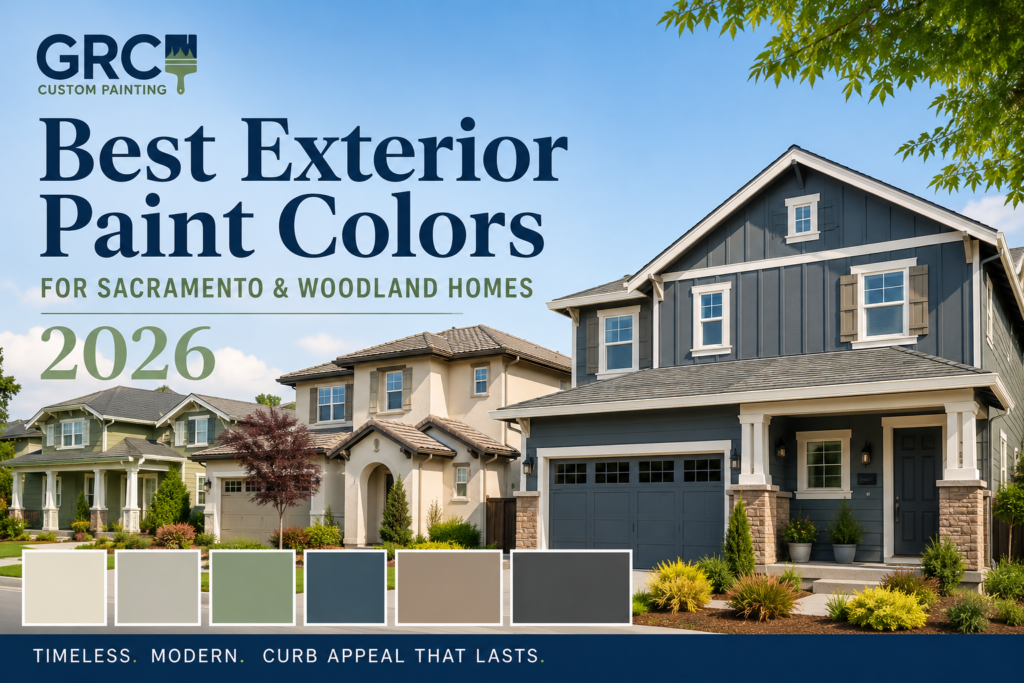
Best Exterior Paint Colors for Sacramento & Woodland Homes

Picking an exterior paint color is one of the highest-stakes decisions in a repaint — it’s the one that’s visible from the street every single day. Here’s what’s actually trending for 2026, and just as important, what works well specifically under Sacramento Valley sun, since a color that looks great in a coastal or Midwest climate can look completely different once it’s baked in NorCal light for a full summer. Quick Answer: Top Exterior Paint Colors for 2026 Warm neutrals: Sherwin-Williams’ 2026 Color of the Year, Universal Khaki (SW 6150), leads this category. Warm khakis, greiges, and taupes are replacing the cool grays that dominated the last decade. Soft sage and olive greens: One of the strongest breakout trends this year, pairing well with natural wood accents and black metal hardware. Warm whites (not stark white): Still popular, but the shift is toward creamy, warm-toned whites rather than bright, stark white. Charcoal and deep black-blue: A bold, modern option that pairs well with light trim and warm wood accents. Earthy browns and terracotta: Especially strong on Craftsman and Mediterranean-style homes, often used on doors and shutters as an accent rather than the full body. Why Sacramento’s Sun Changes Your Color Choice Woodland and the greater Sacramento area get intense, direct summer sun for months at a time, and that changes how color should be chosen — not just which color looks nice on a swatch. Avoid stark white. Bright, cool whites can look almost glaring in direct NorCal sun and tend to show dirt and fading faster. A warm white or soft off-white reads as richer and more upscale once it’s on a full exterior. Warm undertones generally perform better. Colors with warm undertones, khaki, taupe, warm greige, tend to look more natural and less washed-out in strong, warm California light than cool-toned grays and blues. UV resistance matters more here than in milder climates. Ask about UV-resistant, fade-resistant paint lines specifically, with the amount of direct sun exposure most Woodland homes get, a cheaper paint line can visibly fade within just a few years on south- and west-facing walls. Color by Home Style Stucco / Mediterranean-style homes. Warm whites, creamy off-whites, and warm taupes are the strongest match for the clay tile roofs and stone accents common on Mediterranean-style stucco homes throughout the area, paired with black window frames or a dark garage door for contrast. Traditional and ranch-style homes. These work well with warm neutrals, soft sage greens, or classic warm whites, colors that read as timeless rather than trend-driven, which matters if you’re not planning to repaint again for 7-10 years. Modern-style homes. Charcoal, soft black, and deep blue-black bodies paired with lighter trim create the bold, contemporary look many newer builds are going for. Trim and Accent Pairing Tips Warm white or khaki body + black trim and black front door = clean, timeless, and currently one of the most requested combinations. Sage or olive green body + natural wood door + black hardware = a softer, nature-inspired look that photographs well and ages gracefully. Charcoal body + warm white trim = the boldest option, best suited to homes with strong architectural lines. How a Color Consultation Works Choosing a color from a small swatch is genuinely difficult, colors shift dramatically once they’re on a full wall in direct sun versus a 2-inch chip indoors. I offer color consultations as part of every exterior color project: we look at your home’s lighting, roofline, existing stonework or trim, and test larger samples directly on your walls before committing to a full repaint. See residential painting services for more on how color consultations fit into a project, or go straight to exterior painting services if you’re ready to plan a repaint. See It Before You Commit Photos and swatches only tell you so much, browsing real project photos is one of the best ways to see how these colors actually look on homes similar to yours in the Woodland and Sacramento area. Frequently Asked Questions What is the most popular exterior house color for 2026? Warm neutrals are leading 2026, with Sherwin-Williams’ Universal Khaki (SW 6150) as the official Color of the Year, though soft sage green is the fastest-growing trend. Should I avoid white exteriors in Sacramento’s sun? Not entirely, but choose a warm, soft white rather than a stark, cool-toned white, which tends to look harsh and shows dirt faster under direct sun. How do I choose a color for stucco versus wood siding? Stucco tends to favor warm whites, taupes, and earth tones that suit Mediterranean and Spanish-style architecture, while wood siding works well with a broader range including greens, blues, and warm neutrals. Do you offer color consultations in Woodland, CA? Yes, every exterior project includes guidance on choosing a color that fits your home’s lighting, style, and existing finishes. How many color samples should I test before deciding? I recommend testing at least 2-3 finalist colors directly on your home’s walls in both morning and afternoon light before committing, since colors shift noticeably throughout the day. Ready to find the right color for your home? Request a free estimate and color consultation or see exterior painting services for full details.

exterior paint
Exterior painting

How Much Does It Cost to Paint a House Exterior in Sacramento, CA?

Exterior paint takes the brunt of everything Sacramento Valley weather throws at it — intense summer sun, dry heat, and the occasional heavy winter rain. If yours is starting to fade, chalk, or peel, here’s a straight answer on what a professional repaint actually costs in Woodland and the surrounding area, plus when to schedule it for the best results. Quick Answer Exterior house painting in the Sacramento area typically costs $1.50 to $4.50 per square foot, or roughly $3,000 to $9,000 for an average single-story home, depending on siding type, home size, and how much prep work is needed. Home Size Typical Cost Range Small single-story (1,000-1,500 sq ft) $3,000 – $5,500 Mid-size single-story (1,500-2,000 sq ft) $4,500 – $7,000 Two-story home (2,000-2,800 sq ft) $6,500 – $10,000 Larger or architecturally complex homes $10,000+ These figures assume a home in reasonable condition. Homes needing significant scraping, wood repair, or stucco patching will run higher. Get a free estimate for a number based on your actual home, not a size-only guess. What Drives Exterior Painting Cost in Woodland & Sacramento Siding material. Wood siding needs careful prep and often more paint to seal properly. Stucco is porous and can require extra coats to fully cover. Vinyl and fiber cement are generally the most cost-efficient surfaces to paint. Surface prep and condition. Power washing, scraping peeling paint, patching stucco cracks, and priming bare wood are usually the biggest cost variable — two homes the same size can have very different quotes based on condition alone. Number of stories. Two-story homes need ladders, scaffolding, or lift equipment, which adds both time and cost compared to single-story work. Trim, shutters, and doors. These are typically priced separately from the main siding since they require more detail work per square foot — bundling them into the same project is usually more cost-effective than doing them separately later. Paint quality. In Sacramento’s climate, UV-resistant, high-quality exterior paint is worth the higher per-gallon cost — it holds color and resists cracking significantly longer under our summer sun than budget paint does. Interior vs. Exterior Cost Exterior painting generally runs a bit less per square foot than interior work, but the total project cost is often similar or higher once you factor in the larger surface area of a home’s exterior. If you’re deciding which to prioritize this year — or planning both — see the interior painting cost guide for a full comparison. Best Time of Year to Paint Your Exterior in Woodland, CA Paint cures best between roughly 50°F and 85°F. Woodland and Sacramento summers regularly push well past that in the afternoon, so timing matters more here than in milder climates: Spring (March-May) — Generally the ideal window: mild temperatures, low rain risk, and good drying conditions. Summer (June-September) — Workable, but mornings only. Afternoon surface temperatures on south- and west-facing walls can exceed 100°F, which causes paint to dry too fast for proper adhesion. Fall (September-October) — A strong second option, with cooling temperatures and typically dry conditions before winter rain arrives. Winter (November-February) — Generally avoided. Cooler temps slow curing, and rain risk increases the chance of a delayed or interrupted project. I schedule exterior projects around these windows so the paint job actually lasts, rather than just getting it done on whatever day works for the calendar. What About Commercial Properties? Everything above applies to residential homes. Commercial and multi-unit properties are priced differently based on square footage, access, and coating specifications. See commercial painting in Woodland if this project is for a business rather than a home. How to Get an Accurate Exterior Quote An accurate exterior quote requires an in-person walkthrough — photos and phone descriptions miss too much (siding condition, trim detail, access difficulty). When I quote a project, I check: Total exterior square footage and number of stories Siding material and its current condition Trim, shutters, doors, and any wood repair needed Access — landscaping, fencing, or anything that affects setup Every estimate is free with no obligation — request yours here. Why Homeowners Choose a Local, Licensed Exterior Painter Exterior work is harder to “redo cheaply” than interior — a poor exterior job shows up in peeling and fading within a year or two, not just a bad-looking wall. I’m a licensed California contractor based in Woodland, and I handle every exterior project personally from prep through final walkthrough. See why homeowners trust GRC Custom Painting for more on how I work, or browse real project photos to see finished results. Frequently Asked Questions How much does it cost to paint a 2,000 sq ft house exterior in Sacramento? Most 2,000 sq ft single-story homes run $4,500 to $7,000; two-story homes of the same size typically run higher due to access requirements. What time of year is cheapest to paint a house exterior? Late fall and winter often have lower demand and more flexible scheduling, but weather risk is higher — spring and early fall balance cost and reliability best. How long does exterior paint last in Sacramento’s climate? Quality exterior paint typically lasts 7-10 years in this climate, though intense sun exposure on south- and west-facing walls can shorten that somewhat. Do I need to pressure wash before painting? Yes — power washing removes dirt, chalking, and mildew that would otherwise prevent paint from properly adhering, and it’s typically included in a professional exterior quote. Do you offer free exterior estimates in Woodland, CA? Yes — every estimate is free with no obligation. Contact me here to schedule a walkthrough. Ready to get a real number for your exterior project? Request your free estimate or see exterior painting services for full details.  

grc_sacramento_interior_painting_cost_featured
Interior Painting

How Much Does It Cost to Paint a House Interior in Sacramento, CA?

If you’re planning an interior repaint in Woodland, Davis, or anywhere in Sacramento County, the first question is almost always the same: how much is this actually going to cost? I’m Gerry, and as a residential painter working across Yolo, Sacramento, and Solano counties, I get asked this on nearly every phone call. Here’s a straight answer, based on real project pricing — not a national average pulled from a random calculator. Quick Answer Interior house painting in the Sacramento area typically costs $2 to $6 per square foot, or $2,000 to $7,500 for a full home interior, depending on square footage, ceiling height, trim work, and how much prep the walls need. A single room usually runs $300 to $900. Project Typical Cost Range Single bedroom $300 – $800 Living room $500 – $1,200 Kitchen (walls only, no cabinets) $250 – $600 Full 3-bedroom home interior $2,500 – $5,500 Full 4-5 bedroom home interior $4,000 – $7,500 Cabinet painting/refinishing $1,200 – $4,500 (see below) These ranges reflect professional labor and quality materials — not the cheapest bid you’ll find, and not the most expensive either. If you want a number specific to your home, get a free estimate and I’ll give you an exact figure, not a rough guess. What Actually Affects Interior Painting Cost in Woodland & Sacramento Square footage and ceiling height. More wall area means more labor and material, and vaulted or two-story ceilings add a real premium — expect 20-40% more for rooms with ceilings over 9 feet. Wall condition and prep work. Homes with cracks, water stains, or old peeling paint need patching, sanding, and priming before a single coat goes on. This is usually the single biggest cost swing between two similarly sized homes. Number of colors and finishes. Every color change means more cutting-in time and often an extra coat. Accent walls, two-tone rooms, and specialty finishes (like eggshell-to-semi-gloss transitions on trim) add labor time. Trim, doors, and built-ins. Baseboards, crown molding, doors, and built-in shelving are priced separately from wall square footage since they require more detail work per square foot. Paint quality. Premium paint costs more per gallon but usually needs fewer coats and lasts longer — often evening out the cost over the life of the paint job rather than adding to it. Interior vs. Exterior Painting Cost Interior and exterior painting are priced differently because the labor involved is different — exterior work adds weather prep, ladder/scaffold time, and more durable (and pricier) paint. If you’re weighing whether to do interior, exterior, or both this year, my exterior painting services page breaks down exterior pricing factors specifically for Woodland’s climate. Don’t Forget Cabinets Cabinet painting is quoted separately from wall painting because it involves removing doors, labeling hardware, spraying or hand-finishing each piece, and reinstalling everything — a completely different process than rolling a wall. If a kitchen or bathroom refresh is part of your plan, see cabinet painting & refinishing for what that adds to your project. Residential vs. Commercial Pricing Everything above is residential pricing. Commercial spaces — offices, retail, HOA common areas — are quoted differently based on square footage, business hours access, and the type of coating required. If this project is for a business rather than a home, see commercial painting in Woodland for how that pricing works. How to Get an Accurate Quote The only way to get a real number instead of a range is a walkthrough. When I quote a project, I look at: Total square footage and ceiling height Current condition of the walls, trim, and ceilings Number of colors and any accent walls Trim, doors, and cabinetry included in the project Every estimate is free, with no obligation — get in touch here and I’ll walk your home and give you a firm number, not a phone-quote guess. Why Homeowners Choose a Local, Licensed Painter A lower bid from an unlicensed or out-of-area painter often ends up costing more once you factor in redone work, no warranty, or a crew that isn’t around if something needs a touch-up. I’m a licensed California contractor, based in Woodland, and I personally handle every project I quote — see why homeowners trust GRC Custom Painting for the full picture of how I work. Frequently Asked Questions How much does it cost to paint a 3-bedroom house interior in Sacramento? Most 3-bedroom homes in the Sacramento area run $2,500 to $5,500 for a full interior repaint, depending on ceiling height, trim, and wall condition. Is it cheaper to paint a house yourself? DIY saves on labor, but you’re covering paint, supplies, and your own time — and mistakes on prep or cutting-in often cost more to fix later than hiring a professional the first time. How long does interior house painting take? A full home interior typically takes 3-5 days depending on size and how much prep work is needed; a single room can often be completed in a day. What’s included in a professional painting estimate? A proper estimate covers labor, paint and materials, surface prep, protection of furniture and floors, and cleanup — ask any painter to confirm each of these is included before you compare quotes. Do you offer free estimates in Woodland, CA? Yes — every estimate is free with no obligation. Contact me here to schedule a walkthrough. Ready to get a real number for your project? Request your free estimate or see residential interior painting services for the full details on how I work.

Exterior Paint pricing
Exterior painting

How Much Does Exterior House Painting Cost in Sacramento?

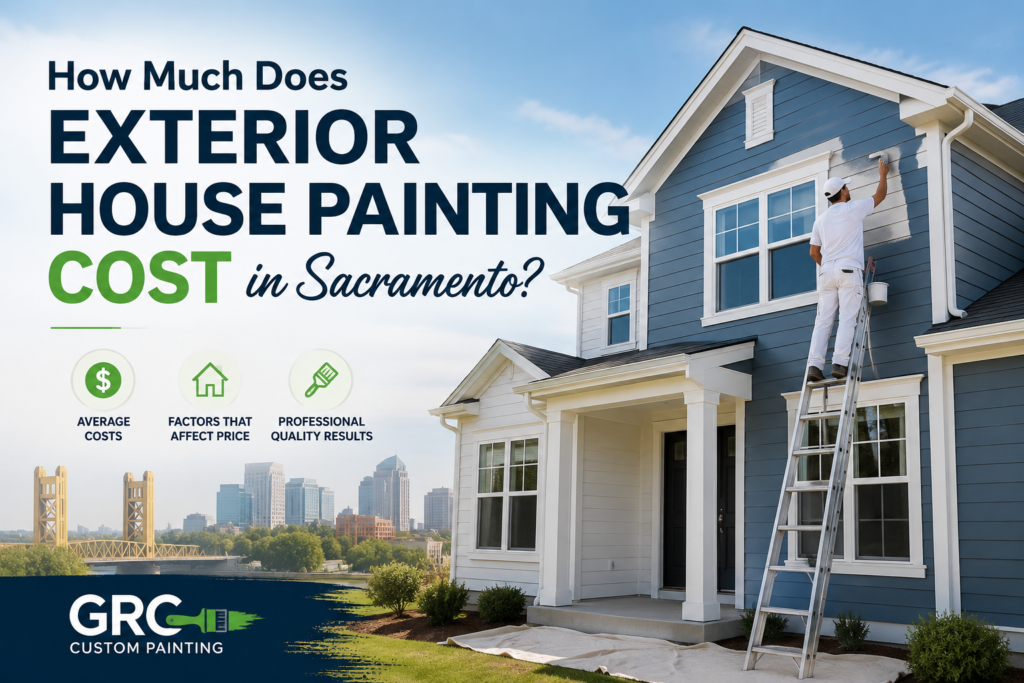
Three quotes for the same house can come back $4,000 apart, and all three painters will tell you theirs is the fair one. After 25 years painting homes across Woodland, Sacramento, and the surrounding valley, I can tell you the exterior house painting cost in Sacramento isn’t a mystery — it’s math. The problem is most homeowners never see the math, just the final number. So let me show you what’s actually behind that number, what pushes it up or down, and how to tell a real quote from one that’s going to cost you twice. What Does It Cost to Paint a House Exterior in Sacramento? Most single-story homes in the Sacramento area cost between $3,500 and $6,500 to paint professionally, while two-story homes typically run $6,000 to $12,000. The final price depends on square footage, siding condition, prep work required, and paint quality — with prep work being the single biggest variable. That’s the short answer. Now the honest part: those ranges assume a licensed, insured painter doing the job right. I’ve seen quotes come in at $2,200 for a two-story house. I’ve also been called back to those same houses eighteen months later to fix peeling paint, because the low bidder skipped the prep and sprayed one thin coat over chalky stucco. Cheap paint jobs aren’t cheap. They’re just billed in installments. What Drives the Price Up or Down? Five factors determine most of your quote: home size and height, siding material, prep condition, paint quality, and access. On a typical Sacramento-area job, labor and prep account for roughly 70–80% of the total cost, and materials the rest. Here’s how each one plays out on real houses around here: Size and stories A 1,500 sq ft single-story ranch in Woodland is a fundamentally different job than a 2,800 sq ft two-story in Natomas. It’s not just more wall — it’s ladders, scaffolding time, and slower, more careful work at height. Expect a second story to add 30–50% to the price, not double it. Siding material Stucco dominates this valley, and stucco is thirsty. It soaks up paint, often needs crack repair and elastomeric patching, and hairline cracking from our clay soil movement is something I repair on nearly every stucco job over 15 years old. Wood siding costs more in prep — scraping, sanding, priming bare spots — but less in paint volume. Fiber cement sits in the middle. Prep condition This is where quotes really separate. A house painted 8 years ago with sound existing paint needs washing, light scraping, and spot-priming. A house that’s gone 20 years in our sun needs serious surface work before a drop of finish paint goes on. In my experience, prep is 60% of a quality exterior job. Any painter who spends more time talking about paint brands than prep is telling you where they plan to cut corners. Paint quality The difference between builder-grade and premium exterior paint is $25–$40 per gallon, which sounds like a lot until you spread it over the whole job — usually $300–$600 total. That upgrade is the cheapest durability money can buy. I use leading products on every job for one reason: I warranty my work, and I don’t want to come back for free. The Sacramento sun factor Here’s something the national cost guides never mention. In this valley, south- and west-facing walls take a beating that coastal homes never see — 100°F summers and relentless UV break down paint film years faster on those exposures. On older homes around Woodland, I routinely see west walls failing while north walls still look fine. That’s part of what a proper exterior painting service accounts for: extra coat thickness on hot exposures, and colors chosen with fade resistance in mind. Dark, saturated colors on a west-facing stucco wall here is a decision you’ll revisit in five years. Why Do Painting Quotes Vary So Much? Because you’re not comparing the same job. One painter quoted two coats over full prep with premium paint. Another quoted one coat, minimal prep, contractor-grade paint, and no crack repair. Both wrote “exterior paint job” on the estimate. When a quote comes in dramatically under the others, something got cut, and it’s almost never the painter’s profit. It’s usually one of these: primer, the second coat, surface repair, or insurance. That last one matters more than people think. In California, any painting job over $1,000 legally requires a CSLB-licensed contractor, and you can verify any license number in about thirty seconds on the CSLB website. Mine is #1097297 — I put it on everything, because the guys working without one don’t carry insurance, and if someone falls off a ladder on your property, that becomes your problem. One more thing worth knowing: if your home was built before 1978 — and a lot of Woodland’s housing stock was — federal law requires EPA Lead-Safe certified practices for any work that disturbs old paint. I carry that certification. Painters who’ve never heard of the RRP rule are painters who scrape lead paint dry onto your garden beds. How Can You Keep the Cost Down Without Wrecking the Job? There are smart ways to save and dumb ways to save. The smart ones: Paint before failure, not after Repainting sound paint costs a fraction of restoring failed paint. If you’re seeing chalking or hairline cracks, that’s your window. Wait for peeling and you’ve added a full day of prep. Schedule shoulder season Spring and fall are ideal painting weather in the valley anyway — summer heat can flash-dry paint on hot stucco, which weakens adhesion. Some painters also have more schedule flexibility outside peak months. Bundle work If your trim, fascia, and body all need paint, doing them together costs far less than three separate mobilizations. The same logic applies to pairing it with interior painting while the schedule is already booked. Ask about discounts directly I offer military and senior discounts, and I’m not the only local painter who does.

Scroll to Top