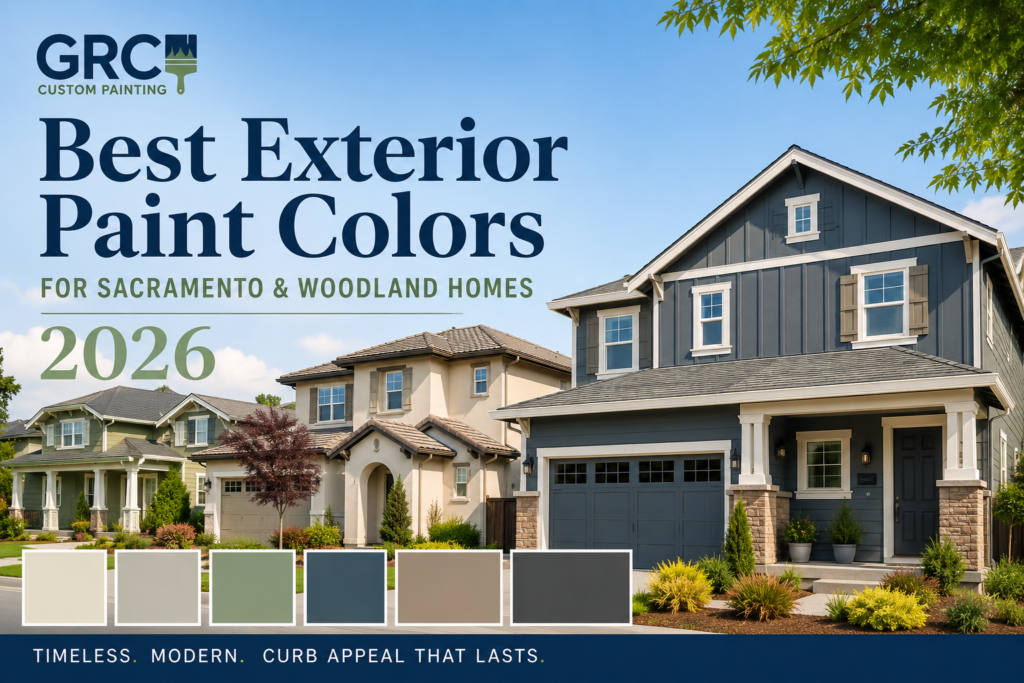
Best Exterior Paint Colors for Sacramento & Woodland Homes in 2026
Picking an exterior paint color is one of the highest-stakes decisions in a repaint — it’s the one that’s visible from the street every single day. Here’s what’s actually trending for 2026, and just as important, what works well specifically under Sacramento Valley sun, since a color that looks great in a coastal or Midwest climate can look completely different once it’s baked in NorCal light for a full summer. Quick Answer: Top Exterior Paint Colors for 2026 Warm neutrals: Sherwin-Williams’ 2026 Color of the Year, Universal Khaki (SW 6150), leads this category. Warm khakis, greiges, and taupes are replacing the cool grays that dominated the last decade. Soft sage and olive greens: One of the strongest breakout trends this year, pairing well with natural wood accents and black metal hardware. Warm whites (not stark white): Still popular, but the shift is toward creamy, warm-toned whites rather than bright, stark white. Charcoal and deep black-blue: A bold, modern option that pairs well with light trim and warm wood accents. Earthy browns and terracotta: Especially strong on Craftsman and Mediterranean-style homes, often used on doors and shutters as an accent rather than the full body. Why Sacramento’s Sun Changes Your Color Choice Woodland and the greater Sacramento area get intense, direct summer sun for months at a time, and that changes how color should be chosen — not just which color looks nice on a swatch. Avoid stark white. Bright, cool whites can look almost glaring in direct NorCal sun and tend to show dirt and fading faster. A warm white or soft off-white reads as richer and more upscale once it’s on a full exterior. Warm undertones generally perform better. Colors with warm undertones, khaki, taupe, warm greige, tend to look more natural and less washed-out in strong, warm California light than cool-toned grays and blues. UV resistance matters more here than in milder climates. Ask about UV-resistant, fade-resistant paint lines specifically, with the amount of direct sun exposure most Woodland homes get, a cheaper paint line can visibly fade within just a few years on south- and west-facing walls. Color by Home Style Stucco / Mediterranean-style homes. Warm whites, creamy off-whites, and warm taupes are the strongest match for the clay tile roofs and stone accents common on Mediterranean-style stucco homes throughout the area, paired with black window frames or a dark garage door for contrast. Traditional and ranch-style homes. These work well with warm neutrals, soft sage greens, or classic warm whites, colors that read as timeless rather than trend-driven, which matters if you’re not planning to repaint again for 7-10 years. Modern-style homes. Charcoal, soft black, and deep blue-black bodies paired with lighter trim create the bold, contemporary look many newer builds are going for. Trim and Accent Pairing Tips Warm white or khaki body + black trim and black front door = clean, timeless, and currently one of the most requested combinations. Sage or olive green body + natural wood door + black hardware = a softer, nature-inspired look that photographs well and ages gracefully. Charcoal body + warm white trim = the boldest option, best suited to homes with strong architectural lines. How a Color Consultation Works Choosing a color from a small swatch is genuinely difficult, colors shift dramatically once they’re on a full wall in direct sun versus a 2-inch chip indoors. I offer color consultations as part of every exterior color project: we look at your home’s lighting, roofline, existing stonework or trim, and test larger samples directly on your walls before committing to a full repaint. See residential painting services for more on how color consultations fit into a project, or go straight to exterior painting services if you’re ready to plan a repaint. See It Before You Commit Photos and swatches only tell you so much, browsing real project photos is one of the best ways to see how these colors actually look on homes similar to yours in the Woodland and Sacramento area. Frequently Asked Questions What is the most popular exterior house color for 2026? Warm neutrals are leading 2026, with Sherwin-Williams’ Universal Khaki (SW 6150) as the official Color of the Year, though soft sage green is the fastest-growing trend. Should I avoid white exteriors in Sacramento’s sun? Not entirely, but choose a warm, soft white rather than a stark, cool-toned white, which tends to look harsh and shows dirt faster under direct sun. How do I choose a color for stucco versus wood siding? Stucco tends to favor warm whites, taupes, and earth tones that suit Mediterranean and Spanish-style architecture, while wood siding works well with a broader range including greens, blues, and warm neutrals. Do you offer color consultations in Woodland, CA? Yes, every exterior project includes guidance on choosing a color that fits your home’s lighting, style, and existing finishes. How many color samples should I test before deciding? I recommend testing at least 2-3 finalist colors directly on your home’s walls in both morning and afternoon light before committing, since colors shift noticeably throughout the day. Ready to find the right color for your home? Request a free estimate and color consultation or see exterior painting services for full details.