How Long Does Interior Paint Last? Painter’s Guide When to Repaint
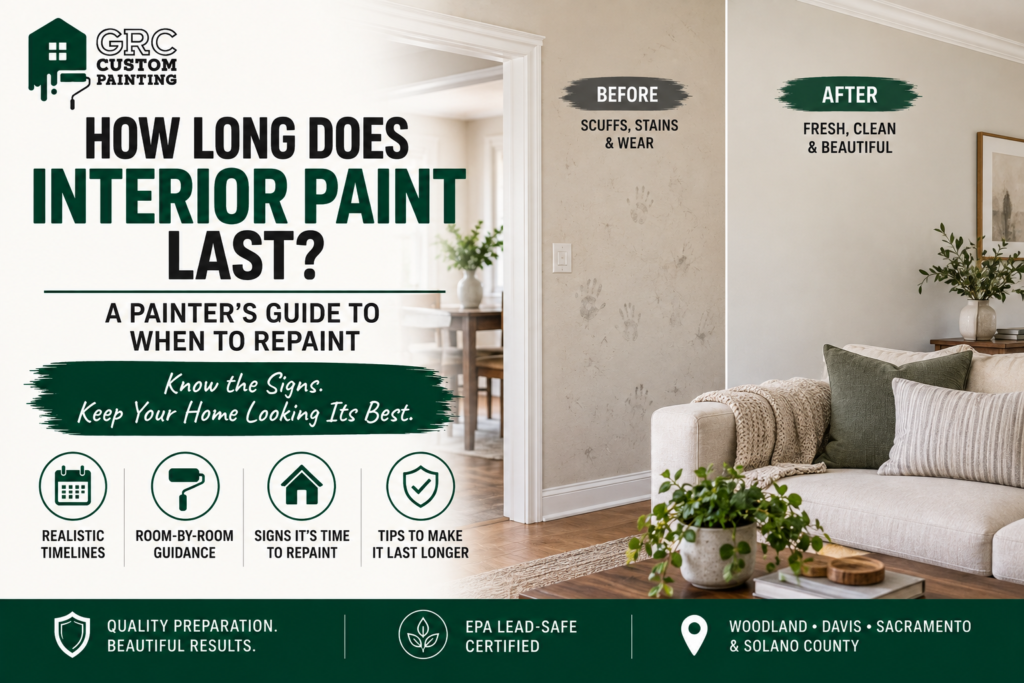
Interior paint can stay in good condition for roughly five to ten years, although busy rooms may need attention sooner. A quiet guest bedroom can look fresh long after a hallway starts showing fingerprints, scuffs, and worn corners. Those numbers are a starting point. What matters is whether the paint still looks good, cleans without damage, and stays firmly attached to the wall. I’m Gerry, the owner of GRC Custom Painting. I personally handle interior painting around Woodland, Davis, and Sacramento, from preparation to the final walkthrough. Here’s how to decide whether your walls need cleaning, a touch-up, or repainting. How Often Should You Repaint Each Room? Different rooms need attention at different times. Daily contact, cleaning, moisture, and the condition of the previous paint job all affect how long interior paint lasts. Treat any repainting schedule as a guide rather than a deadline. How Long Does Paint Last in Bedrooms and Living Rooms? Adult bedrooms, living rooms, and other lightly used spaces can often go five to ten years before needing a refresh. Some stay presentable longer, particularly when the walls receive little contact and the original preparation was sound. Children’s bedrooms may show wear sooner because of fingerprints, drawings, toys, and furniture rubbing against the walls. That doesn’t automatically mean repainting the entire room. Start by checking whether the damage is isolated or spread across several walls. How Often Do Kitchens and Bathrooms Need Repainting? Kitchens and bathrooms may need attention within roughly three to six years, depending on ventilation, cleaning, and the paint used. Kitchen walls collect cooking residue and splashes. Bathrooms deal with moisture, especially when ventilation is limited. A suitable, washable coating helps, but it cannot solve a leak or persistent condensation. If paint is peeling or stains keep returning, investigate the cause before deciding that the room simply needs another coat. Why Do Hallways and Trim Show Wear Sooner? Hallways, stairways, door frames, and baseboards receive frequent contact. Bags scrape corners, shoes mark trim, and hands leave prints around doorways. Busy areas can start looking worn within a few years while nearby rooms remain in good condition. Repainting those surfaces separately can make sense without committing to a whole-house interior project. Ceilings usually receive less contact and often need repainting less frequently. However, stains or cracking deserve their own assessment. What Makes Interior Paint Wear Out Sooner? The life of a paint job depends on the coating, the preparation underneath, and how the room is used. Choosing a suitable product matters, but the work before painting is just as important. How Do Paint Quality and Sheen Affect Durability? A washable interior paint can make everyday maintenance easier, especially in rooms where fingerprints and splashes are common. Check the product’s cleaning and stain-resistance information rather than judging durability by sheen alone. Eggshell and satin are common choices for interior walls. Some matte products are also designed to tolerate cleaning, so it’s worth looking beyond the finish name. The right choice also depends on the wall’s condition. More reflective finishes can make patches and surface irregularities easier to see. My guide to paint finish types explains those trade-offs. Why Does Surface Preparation Matter? New paint needs a clean, stable surface. Dust, grease, loose coating, and unsuitable glossy surfaces can interfere with adhesion. Preparation may involve cleaning, repairing imperfections, smoothing repairs, and priming where needed. The exact work depends on the surface and the coating being applied. When I assess an interior repaint, I look at what the existing finish is attached to. Painting over an unresolved problem can leave a fresh-looking wall that starts failing much sooner than expected. Can Cleaning and Daily Use Shorten Paint Life? Repeated rubbing and harsh cleaning can change the appearance of a finish. A wall may develop shiny patches or lose color in areas that get scrubbed frequently. Furniture contact, children, pets, and frequent use also contribute to wear. Sunlight can affect color over time, but indoor walls should be assessed according to their actual exposure and condition. Two rooms painted on the same day can age differently simply because one gets used much more heavily. What Are the Signs Your Interior Walls Need Repainting? The condition of your walls is more useful than their age alone. Look for wear that remains after appropriate cleaning, and separate cosmetic issues from symptoms that need investigation. Are Scuffs and Discoloration Still Visible After Cleaning? Light dirt and fingerprints may come off without painting. Follow the coating’s care instructions and test your cleaning method in a small, hidden area first. If marks remain, the finish looks uneven, or several old touch-ups stand out, repainting may give a more consistent appearance. Widespread fading or discoloration can also justify a refresh. However, a color change by itself does not prove that the paint has lost adhesion or that the wall underneath is damaged. Is the Paint Peeling, Bubbling, or Repeatedly Staining? Peeling and bubbling can have different causes, including moisture or poor adhesion. Returning stains may indicate a problem that another coat will only hide temporarily. The cause needs attention before repainting. Otherwise, the same symptoms may return through the new finish. If the wall surface is damaged, that preparation or repair should be discussed before the painting work begins. Should You Touch Up or Repaint the Whole Room? A few isolated marks may only need cleaning or a touch-up. Widespread wear usually calls for a broader repaint. The important question is whether a small repair will blend well enough with the surrounding finish. Matching the color is only part of a successful touch-up. The paint product, sheen, surface texture, and application method also affect the result. Even paint left over from the original job may look different against a wall that has aged or been cleaned repeatedly. Let a test touch-up dry, then look at it in daylight and under the room’s usual lighting. If