

Many painted commercial exteriors fall within a broad five-to-ten-year repainting window, but condition matters more than age. Interior walls may need attention sooner where frequent contact and cleaning wear down the finish. Peeling, recurring stains, and exposed surfaces deserve assessment even when the last paint job was recent.
I’m Gerry, the owner and painter behind GRC Custom Painting. I personally handle commercial painting projects, starting with the condition of the surfaces. A faded entrance, scuffed hallway, and peeling exterior wall may need three different approaches.
How Often Should Commercial Interiors and Exteriors Be Repainted?
Commercial repainting frequency depends on exposure, daily use, and the existing coating. Different parts of the same property rarely wear at exactly the same rate.
How Often Do Commercial Exteriors Need Repainting?
Approximately five to ten years is a useful planning range for many painted exteriors, rather than a maintenance rule. Preparation, building materials, coating compatibility, and weather exposure can shorten or extend that period.
Check the condition before scheduling work solely because a certain number of years has passed. Equally, do not wait for that anniversary if paint is already separating from the surface.
How Often Do Commercial Interiors Need Repainting?
Reception areas, corridors, doors, and frequently cleaned walls can need refreshing before quieter offices. Persistent scuffs and worn finishes may justify repainting while other rooms remain presentable.
Tenant changes and updated branding can also prompt an interior repaint even when the coating is still firmly attached.
What Signs Mean Your Commercial Building Needs Repainting?

Look for persistent wear, loss of paint adhesion, and exposed material. These signs help identify maintenance needs, but the cause should be understood before another coating is applied.
Are Fading and Chalking Reasons to Repaint?
Fading can make a building look uneven or tired without necessarily indicating a damaged surface. Consider how widespread it is and whether the finish otherwise remains sound.
Chalking is a powdery residue on the coating. Persistent chalking needs assessment and suitable cleaning before repainting; new paint should not simply cover a loose, powdery layer.
What Do Peeling, Cracking, or Bubbling Paint Tell You?
These symptoms can indicate poor adhesion, moisture, or problems with the previous application. Exposed surfaces and spreading failure deserve attention.
Moisture can enter around failed joints and openings, contributing to exterior peeling. Coating compatibility also matters. For example, applying latex over an older oil-based finish requires appropriate preparation before recoating.
When Do Interior Scuffs and Stains Need More Than Cleaning?
Try an appropriate cleaning method when the coating is sound. If marks remain or repeated cleaning has worn the finish, repainting may be more practical.
Recurring water stains, dampness, or bubbling need investigation before cosmetic work.
What Makes Commercial Paint Wear Out Faster?
Commercial paint durability reflects the conditions it faces and the foundation beneath it. Product quality matters, but preparation and exposure also influence performance.
How Do Sun, Seasonal Moisture, and Building Materials Affect Paint?
In Woodland and the Sacramento Valley, sun-exposed elevations may fade differently from shaded areas. Seasonal moisture and repeated wetting can create separate maintenance concerns.
Painted stucco, siding, trim, and doors have different preparation requirements. Assess each surface individually. Unpainted masonry does not automatically need painting because adjacent surfaces need refreshing.
How Do Cleaning, Daily Use, and Previous Preparation Affect the Finish?
Frequent touching, furniture contact, and cleaning affect busy interiors. Choose a coating suited to those conditions and follow its cleaning instructions.
When comparing eggshell and satin finishes, consider washability, wall imperfections, and lighting alongside the specific product’s performance. Sheen alone does not determine durability.
Even premium paint can fail over grease, unstable coatings, or unresolved moisture. Preparation must leave a clean, sound surface that accepts the proposed coating system.
Does the Whole Building Need Repainting, or Will Touch-Ups Work?
A full repaint is not always necessary. The extent of wear, coating condition, and appearance you want determine whether cleaning, localized repairs, or broader repainting makes sense.
When Are Cleaning and Localized Repairs Enough?
Isolated marks or a small damaged area may need limited work when the surrounding finish remains sound.
Check why the damage occurred first. A repeatedly damp section requires a different response from a wall marked by a chair.
When Is Repainting a Whole Wall or Elevation More Practical?
Widespread fading, numerous patches, or extensive coating failure may justify repainting a complete surface.
Touch-ups can remain visible because older paint changes with exposure and cleaning. Repainting to a natural boundary, such as a corner, can create a more consistent appearance.
How Can You Plan Repainting Around Your Business?
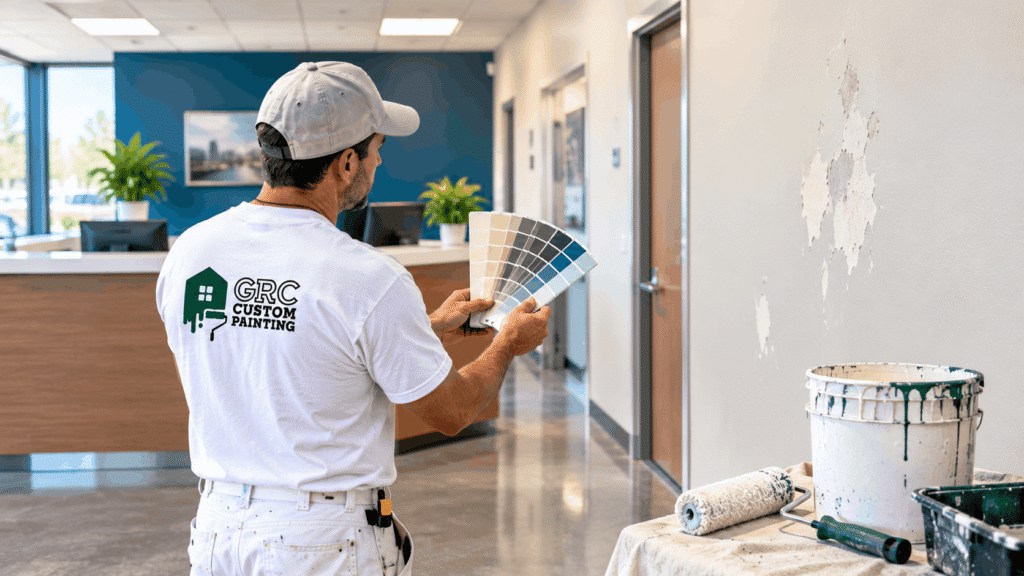
Agree on access, protection, preparation, and drying requirements before work begins. Clear planning helps you understand which areas will be available throughout the project.
What Should Be Agreed Before Painting Starts?
Identify the walls, doors, trim, or exterior surfaces included. Discuss repairs, furniture movement, equipment protection, customer routes, and staff access.
Coordinate the scope and color choices with the property owner or manager where relevant. A written estimate should make the agreed work clear.
For exterior color changes, assess samples alongside existing trim and fixed features. Testing exterior colors in the building’s actual lighting helps reveal differences that small indoor swatches can miss.
How Do Weather, Ventilation, and Drying Affect Scheduling?
Exterior commercial painting needs conditions suitable for the selected coating. The weather considerations involved in planning exterior painting in California including rain, dew, and sun-heated surfaces, also affect business properties.
Interior work requires appropriate ventilation and a plan for returning spaces to use. Dry-to-touch does not mean fully cured or ready for cleaning. Follow the product’s recoat and service requirements rather than assuming every project can be completed overnight.
How Can You Help the Next Paint Job Last Longer?
A lasting finish starts with appropriate preparation and continues with maintenance. Correcting the reason for premature failure is more useful than applying another layer over it.
Remove unstable material, address moisture sources, and use compatible repairs, primer, and finish coats. Follow the coating manufacturer’s requirements for application and drying.
Inspect periodically, paying attention to areas that previously failed. Keep records of products, colors, sheen, and completed work so future maintenance decisions are easier.
When Should You Contact a Commercial Painter in Woodland?
Contact a painter when deterioration is widespread, the existing coating is uncertain, or the work needs careful coordination around business access. Recurring dampness or significant building damage may require another specialist before painting.
For property owners considering commercial painting in Woodland, I personally assess the surfaces and preparation involved before recommending the scope. Whether the next step is targeted work or a broader repaint, the aim is a suitable finish for your building’s condition and use. Contact me for a free estimate to discuss your project.
Frequently Asked Question
Should You Repaint Before Paint Starts Peeling?
Sometimes. Widespread wear or fading may justify preventive repainting while the existing coating remains sound. An assessment helps establish whether cleaning or localized work would be sufficient.
Can You Paint Over Existing Commercial Paint?
Yes, when it is sound, clean, and compatible with the proposed system. Loose coatings, contamination, and moisture problems need attention before repainting.
Does Faded Paint Mean the Building Has Water Damage?
No. Fading alone does not establish water damage. Dampness, recurring stains, blistering, or deteriorating material require closer investigation.
Should You Repaint Before a New Tenant Moves In?
Consider the existing condition, intended use, appearance, and agreed responsibilities. An empty space may offer easier access, but repainting is not automatically necessary at every turnover.
How Do You Know Whether a Stain Needs Repair Before Painting?
A stain that returns, spreads, or remains damp needs investigation. Correct the source and allow suitable drying before choosing stain-blocking preparation and repainting.