
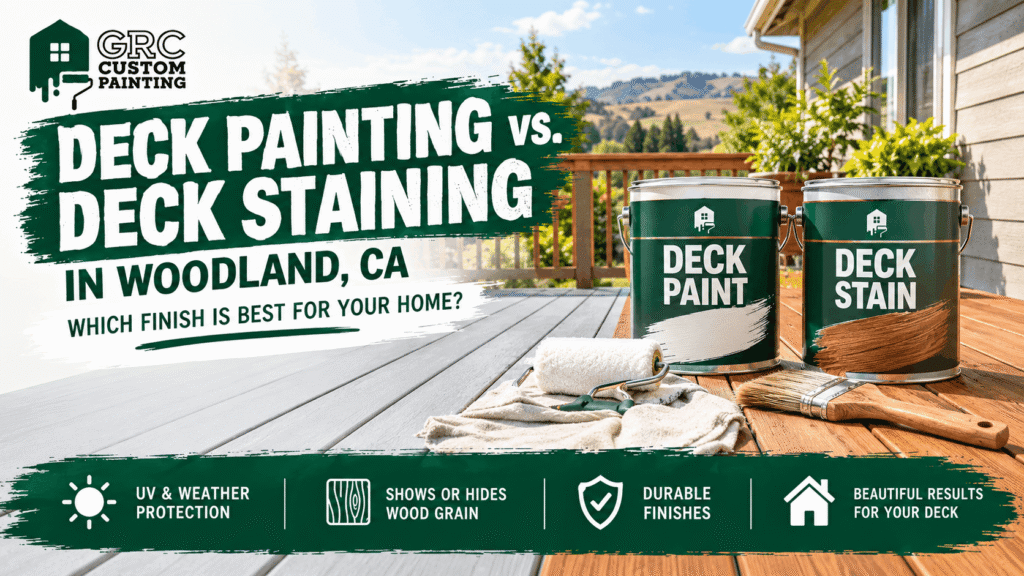
For many sound wood decks in Woodland, a penetrating stain is a practical starting point when you want visible grain and manageable maintenance. Deck paint can suit sound but patched or uneven-looking boards when full coverage matters. Neither is automatically longer-lasting: Woodland’s hot summers, seasonal moisture, and your deck’s condition influence the result.
Sun, foot traffic, and winter rain put outdoor wood through repeated wear. If you’re considering deck painting in Woodland, CA, choosing the finish means thinking beyond color. I’m Gerry, the owner and painter behind GRC Custom Painting, and I personally handle preparation and application.
Here’s how paint and stain compare, what affects their lifespan, and when professional help makes sense.
What Is the Difference Between Deck Painting and Deck Staining?
Deck paint forms an opaque coating over the wood. Stain varies by formulation and opacity: some finishes penetrate, while others form a more noticeable surface film.
What Is Deck Paint?
Deck paint provides full color coverage and hides grain, discoloration, and cosmetic differences between repaired boards. It must be approved for the intended surface, including horizontal decking and foot traffic. It cannot strengthen rotten wood or make unsafe boards serviceable.
What Is Deck Stain?
Wood deck staining adds color and protection while showing varying amounts of wood grain. The same stain-and-topcoat approach applies when staining a wood front door, which often takes even more direct sun than a deck.
What Types of Deck Stain Should Homeowners Know About?
Transparent stains show the most grain. Semi-transparent stain adds color while retaining grain visibility; semi-solid stain provides greater coverage. Solid stain hides grain but usually preserves surface texture.
A wood preservative serves a different purpose. It should not be assumed to provide the appearance, UV protection, or complete finishing system your deck needs.
What Are the Pros and Cons of Deck Painting vs. Staining?
The practical choice depends on appearance, future preparation, and how the existing finish behaves.
What Are the Pros and Cons of Painting a Deck?
Paint offers a strong visual change and helps unify sound, patched boards. However, it can peel, chip, or blister when adhesion fails.
Before recoating, loose material must be removed and the cause addressed. This can make preparation more demanding.
What Are the Pros and Cons of Staining a Deck?
Less opaque stains preserve natural wood character and make gradual weathering easier to see. Penetrating products often simplify recoating, although maintenance may be needed sooner than with more heavily pigmented finishes. Stain will not conceal severe wear, and not every stain is peel-free.
Is Solid Stain a Better Middle Option Than Paint?
Solid stain offers opaque color while retaining wood texture. It can suit uneven-looking but sound wood. However, solid stains can form a film and peel. Treat them as a separate coating choice, not a guaranteed maintenance shortcut.
Which Finish Holds Up Better in Woodland, CA Weather?
Woodland sits in the Sacramento Valley, where sunny, hot summers and seasonal winter moisture affect outdoor finishing conditions. Horizontal boards also receive direct weather exposure and walking wear.
How Does Sacramento Valley Sun Affect Deck Finishes?
UV exposure contributes to fading and wood weathering. Pigmentation helps shield wood, although protection varies by product.
Sun-facing boards may weather differently from shaded sections, so inspect the whole deck rather than judging it from one corner.
Why Does Paint Fail Differently Than Stain?
Film-forming finishes may crack or peel as adhesion deteriorates and wood moves with changing moisture conditions. Penetrating stains tend to wear more gradually; film-forming stains can also peel.
When Is the Best Time to Refinish a Deck?
Late spring or early fall may offer workable conditions, but check the actual forecast. Follow product limits for surface temperature, rain exposure, and drying. Avoid applying coatings to sun-heated boards or damp wood.
How Should a Deck Be Prepared Before Painting or Staining?
Surface preparation gives the finish a suitable foundation. A premium product cannot compensate for dirt, loose fibers, failing coatings, or unsuitable moisture levels.
Why Does Surface Preparation Matter So Much?
Coatings need to bond to sound material. Applying another layer over peeling paint or deteriorated wood leaves the weakness underneath.
What Steps Are Usually Needed Before Refinishing?
Inspect boards, fasteners, and railings first. Resolve unsafe or decayed areas before cosmetic work.
Clean appropriately, remove incompatible or failing finishes, and sand where needed. Pressure washing requires care to avoid gouging wood. Use a wood brightener or neutralizer when the preparation system calls for it, then rinse, dry, and protect nearby surfaces.
Why Does Moisture Content Matter?
Moisture content describes how much water the wood holds. Follow the finish manufacturer’s limit and use a moisture meter where appropriate.
New pressure-treated lumber may need drying time. A water-absorption test can provide a clue about readiness, but it does not replace moisture checks or product instructions.
Which Option Is Better for Older Decks and Newer Wood?
Condition and coating history matter more than age alone. An older deck can remain suitable for stain, while newer wood may need additional preparation.
When Is Paint Better for an Older Deck?
Paint may suit sound boards with patches or uneven color when full coverage is the priority. Solid stain may also be worth considering. Neither repairs decay or serious splitting.
When Is Stain Better for Well-Kept Wood?
Stain suits homeowners who want natural grain and accept periodic maintenance. Test a sample because wood species, preparation, and existing color affect the appearance.
Can You Switch from Paint to Stain Later?
Switching to a penetrating stain usually requires removing paint so the product can reach the wood. Residue can cause uneven absorption. Some opaque products permit compatible existing coatings, so check their specifications.
What Products and Finish Types Work Best for California Decks?
Choose products approved for your deck material, existing coating, and walking surface.
What Should You Look for in Deck Stain?
Consider UV protection, opacity, application requirements, and maintenance instructions. Semi-solid stain provides more coverage than semi-transparent options, but formulations differ.
What Should You Look for in Deck Paint?
Look for horizontal-deck and foot-traffic approval. Follow primer requirements and consider wet-surface traction. Only use anti-slip additives approved for that coating.
Should Boards and Railings Have the Same Finish?
They can differ. Stained boards with painted railings may suit the design and maintenance plan because vertical railings experience different wear. Check each product’s intended use.
When Should You Hire a Professional for Deck Painting in Woodland, CA?
Professional help is useful when coating removal is extensive, wood condition is uncertain, or access is difficult.
Fading, peeling deck paint, splinters, and worn walking paths warrant inspection. Water no longer beading is one clue, not a complete diagnosis.
Ask about licensing, preparation, coating compatibility, repair scope, and a written estimate. I personally handle the painting and preparation included in my exterior painting services in Woodland.
What Is the Best Choice for Most Homeowners in Woodland?
For sound wood with visible grain, a suitable penetrating stain is often a practical choice. Paint or solid stain may better suit full-coverage goals and compatible existing finishes.
Inspect the wood, identify the current coating, and consider sun exposure before deciding. Preparation and compatibility matter more than choosing a finish simply because it is popular. If you’re unsure, contact me for a free estimate.
Frequently Asked Questions
Is It Better to Paint or Stain a Deck in Woodland, CA?
Stain often suits sound wood and natural-looking finishes. Paint suits opaque coverage when the surface and existing coating are suitable.
How Often Should a Deck Be Stained or Painted in California?
There is no universal interval. Inspect annually and follow product guidance, considering exposure, wear, and coating condition.
Can You Stain Over Old Deck Paint?
Penetrating stain generally needs exposed wood. Only apply an opaque stain over paint when its manufacturer permits it.
What Is the Best Time of Year to Refinish a Deck in Woodland?
Spring or fall may provide suitable conditions. Surface dryness, temperature, and the required rain-free period determine readiness.
What Is the Difference Between Solid Stain and Paint?
Both provide opaque color. Solid stain generally retains wood texture, but its application and maintenance requirements differ from paint.
How Do I Know If My Deck Needs Refinishing?
Look for worn areas, fading, loose coatings, and exposed weathered wood. Investigate softness or persistent dampness before refinishing.