

The right deck stain color should complement your home, work with the wood’s natural tone, and suit how much grain you want to see. Before choosing a shade, consider the existing finish, sun exposure, and how a dried sample looks beside your exterior.
I’m Gerry, the owner of GRC Custom Painting. I personally handle preparation and coating work for homeowners in Woodland, Davis, and Sacramento. A color chart helps narrow the options, but your own deck is where the decision needs to happen.
Which Deck Stain Colors Should You Consider for Your Home?
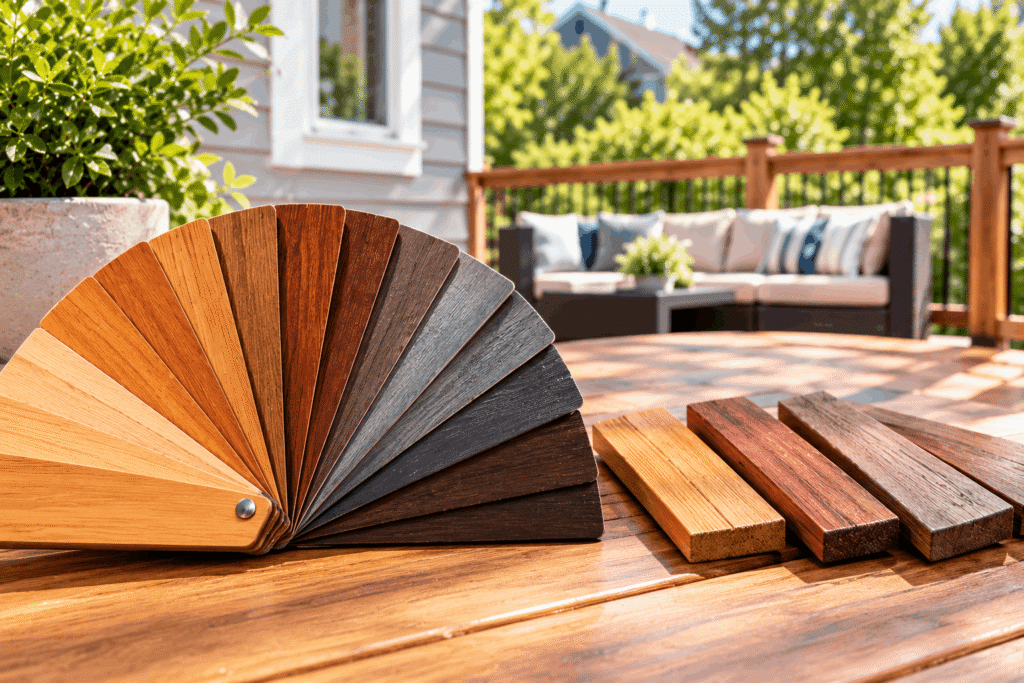
Start with a color family rather than a specific shade name. Natural golds, browns, grays, and reddish tones each create a different look. The best choice depends on the surrounding exterior and the wood beneath the stain.
Natural Cedar and Honey Tones
Cedar-tone and honey-colored stains bring warmth while keeping a natural wood appearance, particularly in translucent or semi-transparent finishes. They are worth considering if you like golden tones and visible grain.
“Cedar tone” describes a color, not the species of wood being stained. On wood with strong red or orange undertones, the finished shade may look warmer than expected.
Walnut and Rich Brown Tones
Brown deck stain colors range from light walnut to deep chocolate. They can create a quiet connection with landscaping or a stronger contrast against pale siding.
Check the undertones carefully. One brown may lean golden, another reddish, and another cooler or grayer. Those differences matter when the deck sits beside brick, stucco, or painted trim.
Driftwood Gray and Soft Taupe
Gray deck stain colors offer a muted alternative to golden and reddish wood tones. Driftwood gray can suit a restrained exterior palette, while taupe introduces some warmth.
A transparent gray stain will still interact with the wood’s original color. It may look different on pale pine, reddish cedar, and darker weathered boards.
Redwood and Mahogany Tones
Redwood and mahogany shades create a richer, warmer appearance. They can make the deck a noticeable part of the exterior without using a fully opaque finish.
Compare them against nearby masonry first. A strong red stain beside red brick can produce more warmth than you intended.
How Do You Match Deck Stain Colors to Your House?
Choose your deck color alongside the exterior features that will remain: siding, stucco, brick, roofing, and trim. Your deck should feel connected to the house, but it does not need to match it exactly.
What Works With White, Cream, or Beige Exteriors?
Natural cedar, honey, and walnut are useful starting points beside light exteriors. They introduce warmth and distinguish the deck from the walls.
Cream and beige usually have warmer undertones than crisp white. Hold your samples beside the actual exterior so you can see whether the combination feels balanced or overly yellow.
What Works With Gray or Blue Exteriors?
For a gray house, consider either a coordinating gray deck stain or a warmer brown that creates contrast. Both approaches can work.
Blue siding can also pair with natural wood tones. The choice depends on whether you want the deck to blend into the exterior or stand apart from it.
What Works With Brick or Earth-Toned Exteriors?
Look beyond the main brick color. Mortar, trim, and subtle brown or gray tones can provide useful starting points.
A neutral brown may balance reddish masonry, while taupe may connect with lighter mortar. Include railings and nearby fencing in the comparison because they affect the overall view.
How Does Stain Opacity Change the Color You See?
Opacity describes how much a stain hides the wood underneath. The shade determines the color direction; opacity determines how strongly the wood’s natural color and grain influence the result.
Transparent and Semi-Transparent Stains
Translucent or transparent stains add relatively little color while leaving much of the wood visible. Semi-transparent deck stain colors introduce more pigment while retaining visible grain.
These finishes depend heavily on the starting surface. The same shade can look different across wood species, older boards, and replacement boards. Manufacturer samples are useful references, but they cannot predict every deck.
Semi-Solid and Solid Stains
Semi-solid stains provide greater coverage while allowing some wood character to remain. Solid deck stain colors conceal much more of the original coloration and grain pattern, although surface texture can still show.
Greater coverage can help create a more uniform appearance. It cannot repair rotten wood, stabilize loose boards, or correct structural problems. Those issues need attention before coating.
How Do Wood Type and an Existing Finish Affect Your Choice?
Your deck’s starting condition influences which colors and finishes are practical. Assess the wood and identify the existing coating before choosing a shade.
Cedar, Redwood, and Pressure-Treated Wood
Cedar and redwood can contribute warm natural undertones. Pressure-treated wood may have a different starting cast depending on the treatment and weathering.
Stain absorption can also vary between boards. A sample on one piece may not represent the entire deck, especially where newer boards sit beside older wood.
Weathered Decks and Previously Stained Boards
Weathering, uneven preparation, and remaining old finish can affect the final appearance. Choosing a darker shade does not automatically solve these differences.
Changing from a dark finish to a lighter or more transparent one may require substantial coating removal. A penetrating stain also needs a suitable surface; it cannot simply soak through an existing paint film.
The preparation method and replacement coating must be compatible with the deck’s condition and the manufacturer’s instructions.
Should You Choose a Light or Dark Deck Stain in Full Sun?
Consider comfort as well as appearance when choosing between light and dark deck stain colors. Darker surfaces generally absorb more solar heat, but actual temperatures depend on the material, coating, exposure, and conditions.
For an exposed deck in Woodland, Davis, or Sacramento, compare lighter brown, tan, or gray samples before committing to a very dark shade. Dark brown may provide the contrast you want, but consider how you use the deck during sunny weather.
Keep heat, fading, and UV protection separate. A darker color does not automatically guarantee longer service life. Pigment, formulation, preparation, and application all contribute to performance.
Clear finishes and lightly pigmented stains also differ in protection. Check the specific product’s claims rather than judging by the shade name alone.
How Can You Test Deck Stain Colors Before Committing?
Test two or three shortlisted colors on representative wood prepared according to the product’s instructions. Let the samples dry before comparing them.
If possible, use matching spare boards prepared like the deck. Otherwise, choose discreet test areas and plan how unwanted samples will be removed. Check more than one board when the deck contains different ages or conditions.
View the dried samples beside your siding and trim, both in sunlight and shade. Online images and small color chips are starting points; a larger sample reveals more of the wood’s influence.
Apply only the coats specified by the manufacturer. Extra coats added just to deepen the color can cause problems with some stain systems.
How Can You Keep Your Chosen Deck Color Looking Good?
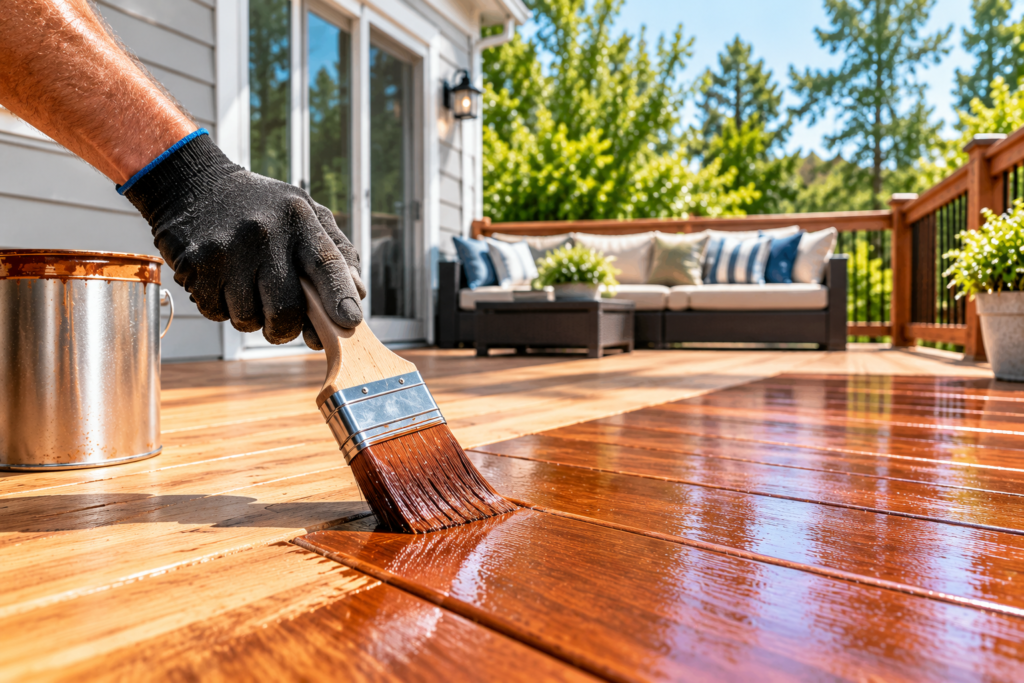
Good color starts with suitable preparation and a coating intended for the surface. Follow the product’s requirements for moisture, temperature, application, and drying.
Keep the deck clean, remove debris that holds moisture, and inspect exposed areas for wear. Recoating needs vary, so use the finish’s condition and product guidance alongside a maintenance schedule.
My guide to how often you should stain an outdoor wooden deck explains the maintenance considerations in more detail.
If you need help choosing a finish, my exterior painting services include fence and deck work. I personally assess the surface, handle preparation, and apply the coating.
What Else Should You Know About Deck Stain Colors?
These final questions can help you avoid surprises when narrowing your choice.
Why Does Deck Stain Look Different From the Color Chart?
Wood species, existing color, preparation, opacity, and lighting all influence the result. Test the actual product on representative wood before committing.
Can You Change a Dark Deck Stain to a Lighter Color?
It may be possible, but preparation depends on the existing coating and desired finish. A lighter transparent stain generally cannot hide a dark coating underneath.
Can Deck Stain Hide Mismatched Replacement Boards?
Greater opacity can reduce visible color differences, but texture and absorption may still vary. Sample both old and replacement boards before choosing.
Should Deck Railings Match the Deck Floor?
They can match or use a coordinated contrast. Choose products suitable for each surface and compare both colors with the house exterior.
Is Natural-Colored Deck Stain the Same as a Clear Finish?
No. A natural-colored stain may contain pigment, while a clear finish may contain little or none. Check the product’s opacity and protection specifications.