
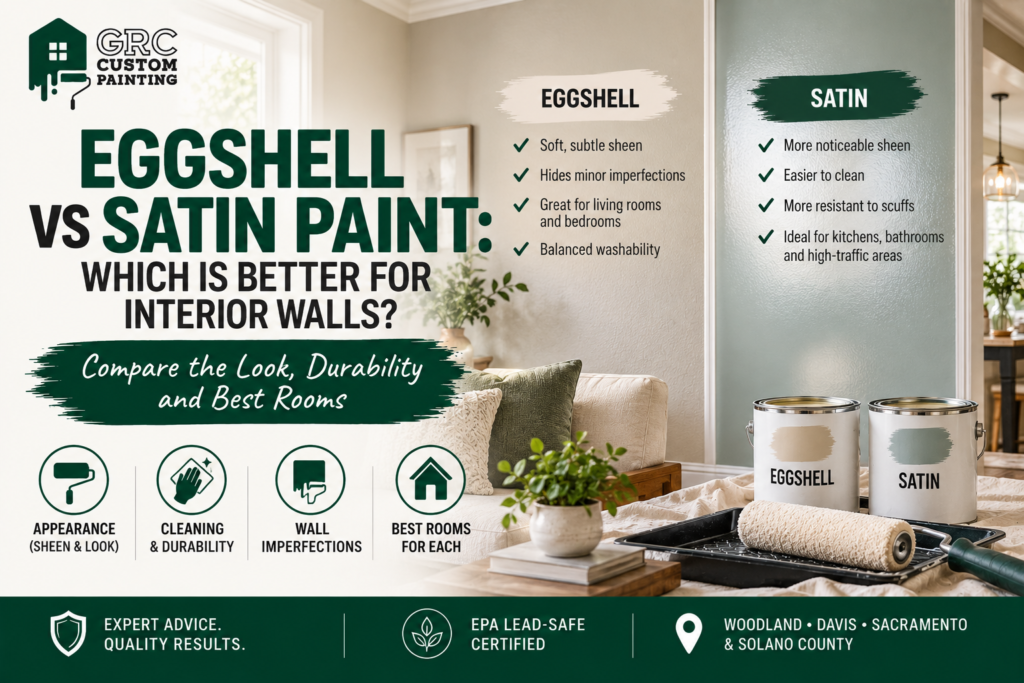
Eggshell paint is often the better choice when you want a softer appearance that makes minor wall imperfections less noticeable. Satin paint has more sheen and, within a comparable paint range, generally handles frequent cleaning better. The right choice depends on your walls, room lighting, and the specific paint, not just the finish name.
I’m Gerry, the owner of GRC Custom Painting. I personally handle interior painting for homeowners in Woodland, Davis, and Sacramento, including helping them choose finishes. Before choosing between eggshell and satin, it helps to think about how you actually use the room.
What Is the Difference Between Eggshell and Satin Paint?
The main difference is sheen: how much light the dried paint reflects. Eggshell usually has a subtle glow, while satin has a more noticeable shine. Both can work on interior walls, but they create different appearances and maintenance trade-offs.
What Is Eggshell Paint?
Eggshell paint is a low-sheen finish named after the gentle luster of an eggshell. It reflects some light without giving walls a strongly glossy appearance.
That makes it useful when you want a soft finish with some washability. It can also make small surface irregularities less noticeable than a shinier coating would. Eggshell is a finish, not a color, so it is available in far more than white or cream.
What Is Satin Paint?
Satin paint typically reflects more light than eggshell, giving walls a soft, visible sheen. It is often considered for spaces where fingerprints, splashes, and regular wiping are part of everyday life.
Finish names are not perfectly consistent across manufacturers. Compare the actual products rather than assuming one brand’s satin will look exactly like another’s.
How Do Eggshell and Satin Compare on Interior Walls?
The differences become clearer across a whole wall than on a small paint chip. Appearance, cleaning, and future touch-ups are the three practical considerations worth weighing before you repaint.
Which Finish Shows Wall Imperfections More?
Satin generally makes surface imperfections more noticeable because it reflects more light. Uneven patches, roller marks, and differences in wall texture can stand out, especially when daylight falls across the surface from the side.
Eggshell’s lower sheen is usually more forgiving. It can be a sensible choice for walls with minor irregularities that you do not want to emphasize.
However, neither finish repairs the surface underneath. Holes, loose paint, and poorly blended patches still need preparation. Choosing eggshell should not mean skipping repairs that affect the finished result.
Which Finish Handles Cleaning and Scuffs Better?
Satin often offers better washability than eggshell within the same paint range. That can be helpful on walls you regularly wipe around light switches, dining areas, or busy passageways.
But washability and scuff resistance are different. One describes how well a coating tolerates cleaning; the other concerns marks caused by contact. The product’s formulation matters alongside its sheen.
A quality eggshell paint can be suitable for busy rooms. Benjamin Moore, for example, identifies eggshell finishes as appropriate for family rooms and hallways. It would be misleading to rule out eggshell simply because a room gets regular use.
Which Finish Is Easier to Touch Up?
Eggshell can be more forgiving of small touch-ups because differences in reflection are less obvious. Satin repairs may catch the light and appear as a shinier or duller patch, even when the color matches.
Neither finish guarantees an invisible repair. Paint age, surface texture, application method, and the original product all affect how well a touch-up blends.
When a repair remains noticeable, repainting the wall from corner to corner may give a more consistent appearance than repeatedly adding paint to the same spot.
Should You Choose Eggshell or Satin for Each Room?
Room names are a starting point, not a fixed rule. A quiet bedroom and a child’s bedroom may need different things from their paint. Consider cleaning frequency, wall condition, and how much sheen you want to see.
Which Is Better for Living Rooms and Bedrooms?
Eggshell is a good option when you prefer a soft appearance with limited glare. It can work particularly well where large windows make reflected light and wall texture noticeable.
Satin may suit a bedroom or living area where walls need frequent wiping. The trade-off is a more visible sheen, so consider whether you like that appearance across a large surface.
For either finish, check the product’s cleaning guidance rather than assuming all paints with the same label perform equally.
Which Is Better for Hallways and Busy Family Spaces?
Hallways collect fingerprints and marks from bags, furniture, and pets. Satin can be useful where repeated cleaning is likely.
However, a washable eggshell paint may be a better balance if the walls are uneven or you prefer less reflection. A product formulated for scuff resistance may also be worth considering.
Think about the problem you need to solve. Frequent surface dirt, contact marks, and damaged drywall are different issues; choosing a shinier paint does not automatically solve all three.
Which Is Better for Kitchen and Bathroom Walls?
Satin is often considered for kitchen and bathroom walls because many satin products tolerate regular cleaning. Still, the finish name alone does not establish whether a coating suits a humid room.
Choose a paint intended for the conditions and follow its application instructions. Some lower-sheen products are specifically formulated for moisture-prone spaces, so higher gloss is not the only option.
Ventilation matters too. Paint cannot correct an ongoing leak or persistent condensation, regardless of how shiny the finish looks.
How Can You Choose the Right Finish Before Repainting?
Choose by looking at the wall, its lighting, and its cleaning needs together. Then compare suitable products in the finish you are considering.
Check the walls during daylight and with the lights you normally use at night. Light falling across a wall can reveal patches and texture that are less obvious when you look straight at it.
If possible, compare samples of the same color in the actual eggshell and satin products. A color sample supplied in a different sheen can help with color selection, but it will not accurately demonstrate your final finish.
Eggshell and satin sit between the flatter and glossier paint finish types. You do not need the shiniest option to get a practical wall coating.
Preparation remains important whichever finish you choose. Cleaning, repairing uneven areas, and priming where needed help create a consistent surface. Satin can make differences in preparation more noticeable, but eggshell also benefits from careful work.
What Else Should You Know About Eggshell and Satin Paint?
Once you have narrowed down the finish, a few practical questions remain. These details matter when changing an existing coating or caring for newly painted walls.
Can You Paint Eggshell Over Satin?
Yes, provided the existing coating is sound and properly prepared. Cleaning, dulling glossy areas, and priming may be necessary depending on the old coating and the new product’s instructions. Changing sheen alone does not determine every preparation step.
Is Eggshell Paint Always an Off-White Color?
No. “Eggshell” can describe either a paint finish or a color name. An eggshell finish has a subtle sheen and can be tinted in many colors, including dark shades.
Can You Use Eggshell Walls With Satin Trim?
Yes. Different finishes can create a subtle distinction between walls and woodwork. Choose a coating suitable for each surface; a wall paint and a trim enamel are not interchangeable simply because they share a sheen.
How Soon Can You Wash Newly Painted Walls?
Follow the specific paint manufacturer’s curing and cleaning instructions. Paint that feels dry may still be developing its resistance to washing. Cleaning too soon or rubbing aggressively can damage the finish or change its appearance.
Need Help Choosing a Finish for Your Interior Repaint?
Eggshell often suits homeowners who want a softer look, while satin can be useful where frequent cleaning matters. The best choice also accounts for the actual product and the condition of your walls.
If you are planning interior painting in Woodland, Davis, or Sacramento, I can help you choose a suitable finish and personally handle the preparation and painting. Request a free estimate so I can look at your rooms and discuss the result you want.